Coated Paper vs PP Synthetic Stickers: Print Finish and Everyday Uses
For dry cartons, gift boxes and indoor packaging, coated paper is a useful starting point. For bottles that may encounter moisture or water droplets, put PP synthetic labels on your shortlist. The final choice depends on the complete label: its face material, printed surface and adhesive must suit the packaging and how it will be used.
Here, coated paper means a coated paper label stock. Names such as Mirrorkote do not describe one universal specification. PP synthetic stock is based on polypropylene, rather than wood-pulp paper. When reviewing custom sticker and label options, confirm the actual stock and finishing available for your order.
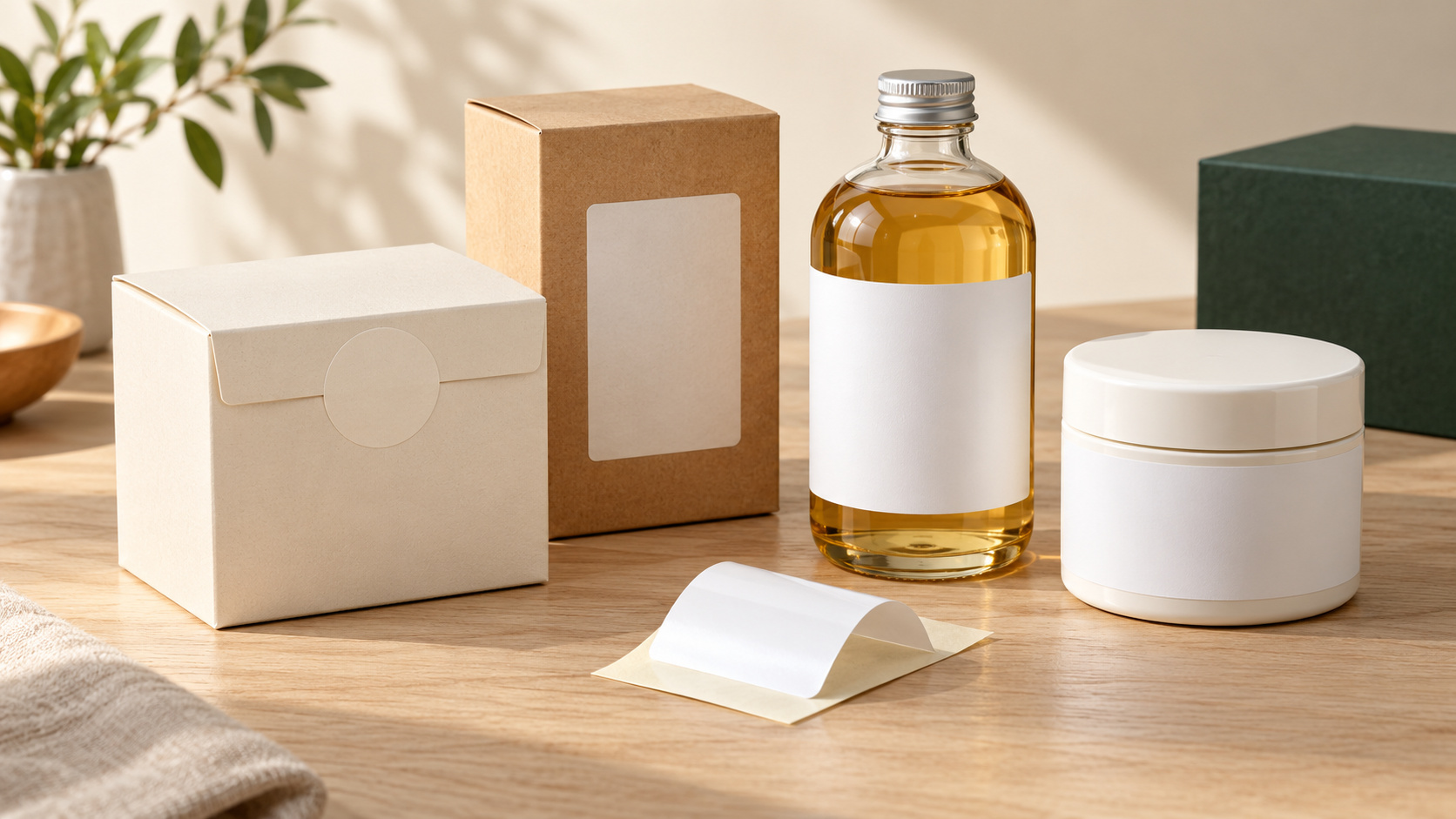
Compare the application before the finish
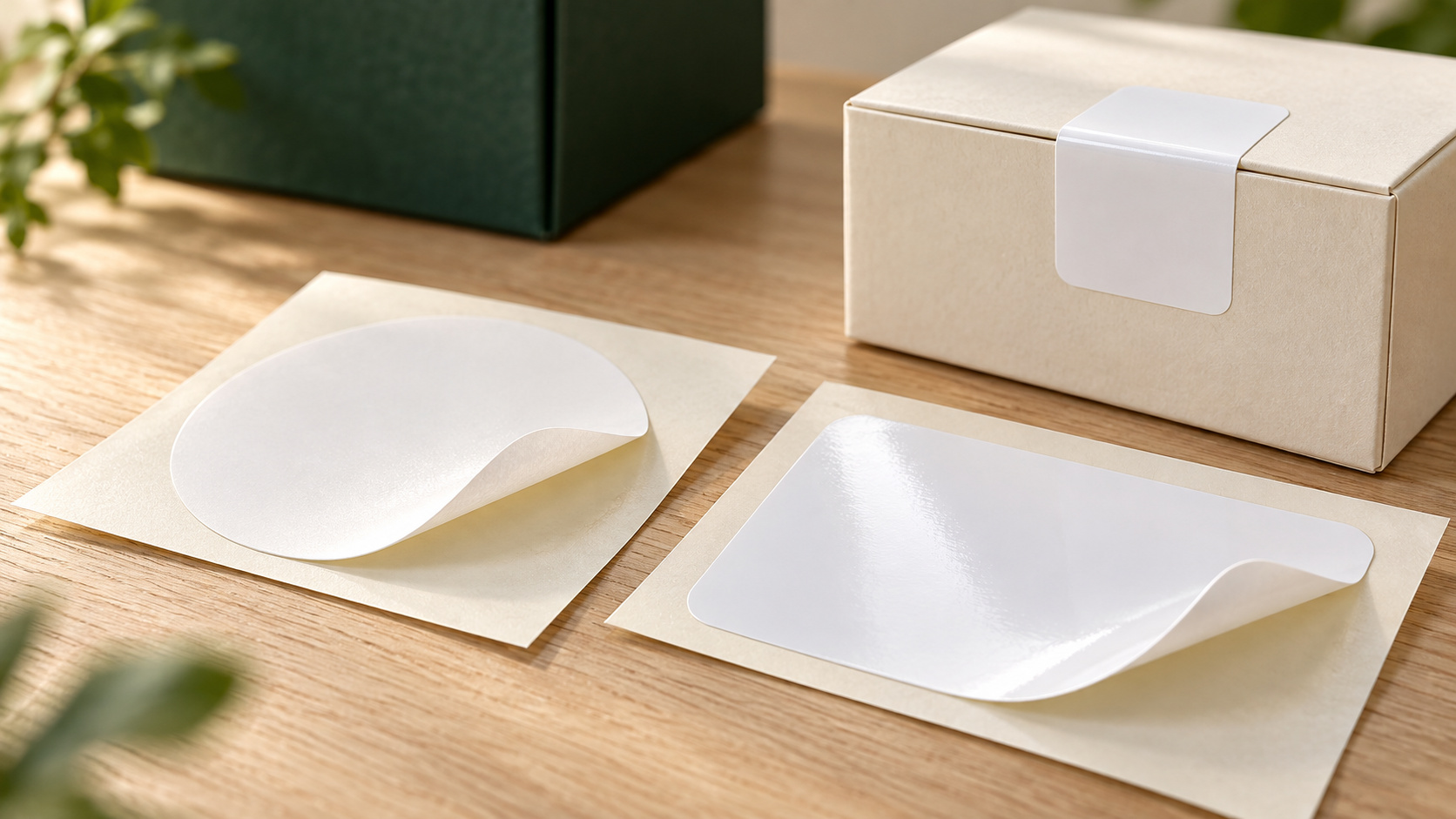
Both materials can carry brand graphics and product information. A photograph cannot establish durability, so use appearance as one part of the decision.
| What to compare | Coated paper stickers | PP synthetic stickers |
|---|---|---|
| Face material | Paper with a coated surface | Polypropylene-based synthetic stock |
| Initial shortlist | Dry cartons, gift boxes and indoor packaging | Bottles and personal care packaging with possible moisture exposure, subject to specification |
| Appearance | Check paper gloss, printed colour and finishing samples | Check surface finish, printed colour and finishing samples |
| Moisture checks | Include cut edges and changes to the paper | Include the printed surface and adhesive, as well as the face stock |
| Handling and rubbing | Ask whether print protection is needed | Do not assume PP means scratch-proof; check protection separately |
| Adhesion and price | Quote for the actual surface, size, quantity and finish | Use the same quote conditions and confirm adhesive suitability |
Coated paper: start with dry packaging and clear presentation
Shortlist coated paper for gift-box branding, carton labels and indoor packaging information. Review small text, colour expectations and reflections. If you want a matte or gloss appearance, ask which finishing options are available and inspect a sample.
A glossy face is not proof of water resistance. Avery Dennison flags edge-wicking under high humidity for a particular cast-coated paper in its guide. That is a reason to consider exposed edges, not a finding about every coated paper. Source: Avery Dennison 2026 Product Guide, page 15.
A dry gift box and a chilled bottle can use different label materials while sharing the same visual identity. Matching the artwork does not require matching every material specification.
PP synthetic stock: assess the whole label for moisture exposure
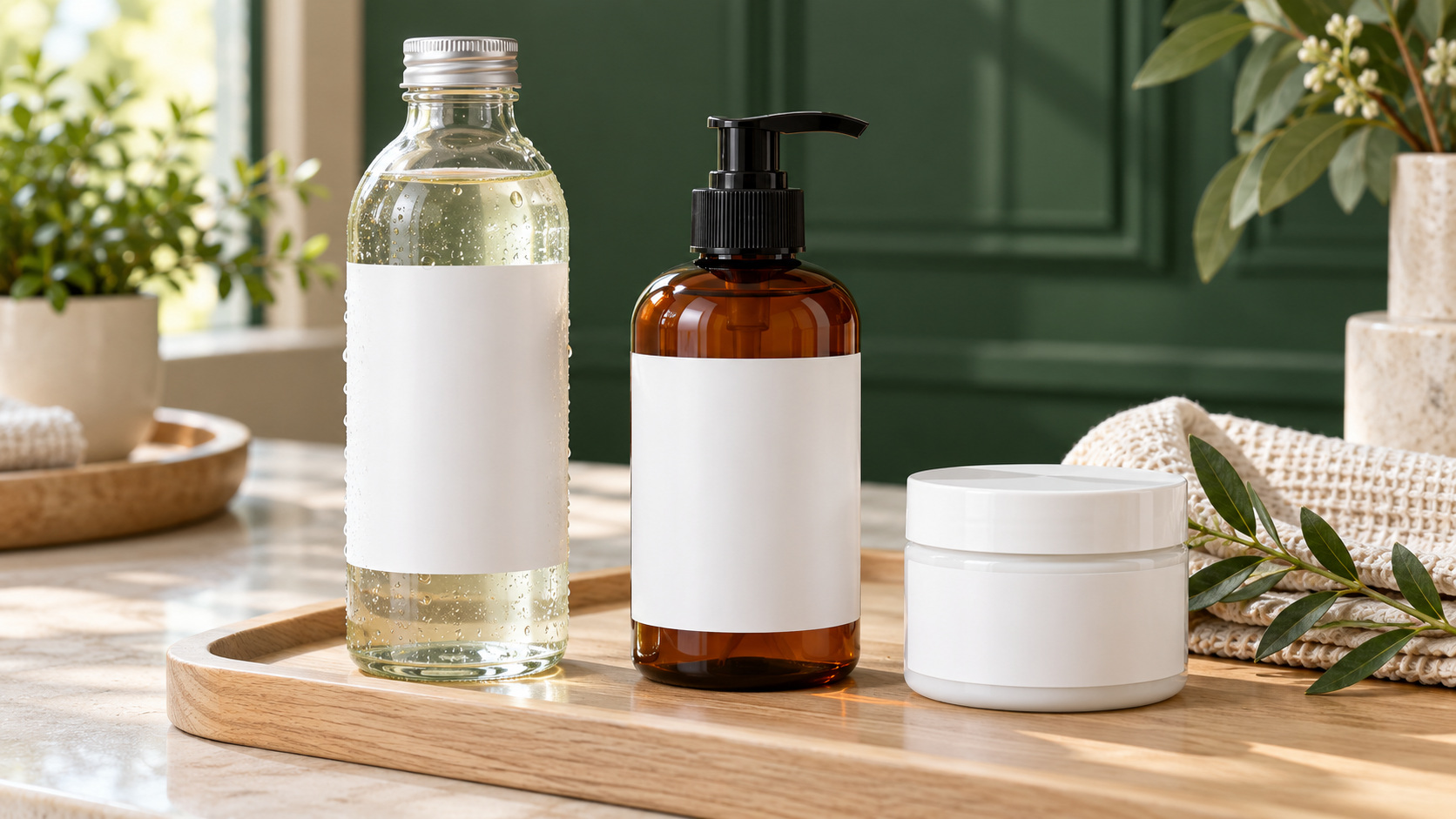
PP is worth considering for bottle labels that may meet moisture. YUPO describes its synthetic paper as polypropylene resin with inorganic fillers and water-repellent properties. This explains a material principle; it does not certify another supplier's finished label. Source: YUPO Printing Recommendations, page 1.
Describe the actual routine. Will labels be applied to dry bottles at room temperature, or to bottles already carrying condensation? Will customers handle them with wet hands or wipe them repeatedly? For round bottles, also provide the usable straight-sided height, bottle curvature and proposed seam position. Check fit with a paper dummy, then confirm the candidate material on the real container.
Water resistance, print protection and adhesion are separate checks
A water-resistant face material answers only part of the question. The print may still need protection against rubbing. HERMA lists finishing for additional abrasion protection even for its PP labels. Its guidance supports checking the printed surface separately from the base material. Source: HERMA material and finishing guidance.
Adhesion also depends on the adhesive, container surface and application conditions. Lamination does not seal every cut edge or replace adhesive selection. If you require immersion, freezing, washing or direct food contact, state that separately and request evidence for the proposed construction.
Check a sample and prepare a complete enquiry
Make a dummy at the final size to check text, placement and seams. Ask whether samples of the candidate materials can be arranged, then observe them on the actual packaging under the intended conditions. Record the surface condition at application, observation period, changes to the print and any lifting edges. This is a proposed checking method, not a test performed for this article.
- Packaging: identify the surface and include photographs.
- Size and artwork: give finished dimensions, shape and file versions.
- Quantity: list each design separately.
- Use: describe moisture, rubbing and any chilled-storage process.
- Delivery: state the preferred finish, required date and destination.
Review standard sticker options or enquire about custom sizes. Compare quotations with matching dimensions, quantities, finishing and delivery scope before confirming costs and production arrangements.
Questions before ordering
Can laminated paper replace PP?
Not on the word “laminated” alone. Compare the intended use and finished samples, including edges, printed surface and adhesion. Dry cartons and bottles with condensation may need different constructions.
Does PP always stick more firmly?
No. PP describes the face material. The adhesive, surface and application conditions still need checking on the intended container.
Which costs less?
Request comparable quotes for the same size, quantities per design and finishing. Material names alone do not establish the final order price.
With packaging photographs, dimensions, quantities and artwork ready, send your enquiry through WhatsApp to confirm material options and sample arrangements.
Prepared by the Vivid Pulse Content Team using public manufacturer references, without in-house material testing. Referenced brands explain general principles and do not indicate the brands or grades supplied.